

Details
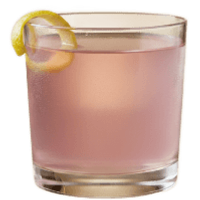
The Pink Gin is one of the simplest and most elegant cocktails in existence, a drink that owes its identity not to elaborate mixing but to restraint and balance. Composed of just two ingredients—gin and Angostura bitters—it is a classic that highlights both the crisp botanicals of gin and the aromatic complexity of bitters. Its name comes from the soft blush imparted by the bitters, a subtle coloring that belies the drink’s strength and sophistication. The cocktail originated in the mid-nineteenth century within the British Royal Navy, where Angostura bitters were carried as a medicinal tonic. Sailors often found neat bitters too potent on their own, but when combined with gin, the mixture became both palatable and invigorating. This marriage of practicality and pleasure gave rise to what was first a naval custom before becoming a popular order in gentlemen’s clubs and bars across Britain. Traditionally, Pink Gin is served “in or out.” This refers to whether the bitters are swirled around the inside of the glass and discarded (“out”) before the gin is poured, or whether they remain in the glass and blend more fully with the spirit (“in”). Either way, the bitters provide a warming spiced character that complements the gin’s juniper-forward profile. The drink is typically enjoyed chilled, either neat or with a splash of water, making it closer in character to a spirit-forward aperitif than a mixed cocktail. By the late nineteenth and early twentieth centuries, Pink Gin had become firmly associated with British identity, a cocktail that carried connotations of naval discipline, colonial travel, and refined drinking habits. It remained especially popular among officers and clubmen, its stark simplicity appealing to those who valued the unadorned taste of quality spirits. Though it has never been a mass-market favorite like the Martini or Gin and Tonic, the Pink Gin endures as a niche classic, particularly among purists and traditionalists. Modern craft bartenders sometimes revive it as a way of highlighting high-quality gins, pairing their botanicals with the spiced depth of bitters in a manner that feels both historic and contemporary. More than just a drink, the Pink Gin represents a moment in history when cocktails were closely tied to practicality, medicine, and naval tradition. Its continued presence in the cocktail canon speaks to the power of simplicity—proof that even the most minimal combinations can achieve timeless elegance.