

Cocktail

Manhattan

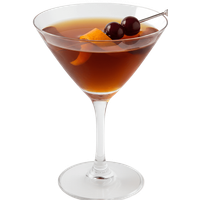
The Manhattan is one of the most distinguished and enduring cocktails in history, often placed alongside the Martini and the Old Fashioned as a cornerstone of classic mixology. Its origins are generally traced back to New York City in the late 19th century, with the Manhattan Club frequently credited as its birthplace around the early 1880s. While some of the details remain obscured in legend, the cocktail swiftly rose to prominence as a refined and sophisticated drink, admired for its balance of strength and subtlety. The creation of the Manhattan coincided with a period when vermouth was first gaining widespread popularity in the United States. The marriage of whiskey and sweet vermouth, accented by aromatic bitters, represented a leap forward in cocktail culture, blending the bold, spicy character of American whiskey with the herbal and slightly sweet depth of vermouth. This innovation allowed bartenders to craft a drink that was both powerful and nuanced, appealing to those seeking elegance in their glass. As New York emerged as a cultural and financial hub in the late 19th century, the Manhattan became synonymous with the city’s sophistication and modernity. Its reputation quickly spread across the United States and beyond, with European bartenders adopting it as a symbol of American refinement. The cocktail’s name, directly tied to one of the world’s most iconic boroughs, further reinforced its prestige and recognition on the global stage. The Manhattan remained a staple even through the challenging years of Prohibition, though its quality sometimes suffered due to the use of inferior spirits. After the repeal, the cocktail swiftly reclaimed its place at the center of American bar culture. By the mid-20th century, it was regarded as one of the “unassailable classics,” featured prominently in cocktail manuals and embraced by bartenders who valued tradition and precision. Variations of the Manhattan began to emerge as bartenders explored subtle changes in its composition. The Dry Manhattan, made with dry vermouth, offered a crisper edge, while the Perfect Manhattan combined both sweet and dry vermouth in equal measure for a more balanced profile. Rye whiskey has historically been the spirit of choice, but bourbon also became widely used, each lending its own interpretation to the drink’s character. Today, the Manhattan endures as a benchmark for bartenders and a favorite of cocktail enthusiasts. Its timeless formula has made it a fixture in competitions, tasting events, and the menus of world-renowned bars. The drink’s ability to adapt while maintaining its core identity has ensured its place as one of the most respected cocktails in history, a symbol of craftsmanship, elegance, and cultural continuity. The Manhattan offers a smooth, warming, and aromatic profile. The whiskey provides a rich foundation, with rye delivering a spicier, drier edge and bourbon offering sweeter, fuller notes. Vermouth contributes herbal and lightly sweet undertones, while bitters deepen the flavor with a touch of spice and complexity. The maraschino cherry garnish enhances the experience with a hint of fruitiness that lingers with each sip.

Download on the App StoreGet it on Google Play
Manhattan

Glass type

Cocktail glass

Details

The Manhattan is one of the most distinguished and enduring cocktails in history, often placed alongside the Martini and the Old Fashioned as a cornerstone of classic mixology. Its origins are generally traced back to New York City in the late 19th century, with the Manhattan Club frequently credited as its birthplace around the early 1880s. While some of the details remain obscured in legend, the cocktail swiftly rose to prominence as a refined and sophisticated drink, admired for its balance of strength and subtlety. The creation of the Manhattan coincided with a period when vermouth was first gaining widespread popularity in the United States. The marriage of whiskey and sweet vermouth, accented by aromatic bitters, represented a leap forward in cocktail culture, blending the bold, spicy character of American whiskey with the herbal and slightly sweet depth of vermouth. This innovation allowed bartenders to craft a drink that was both powerful and nuanced, appealing to those seeking elegance in their glass. As New York emerged as a cultural and financial hub in the late 19th century, the Manhattan became synonymous with the city’s sophistication and modernity. Its reputation quickly spread across the United States and beyond, with European bartenders adopting it as a symbol of American refinement. The cocktail’s name, directly tied to one of the world’s most iconic boroughs, further reinforced its prestige and recognition on the global stage. The Manhattan remained a staple even through the challenging years of Prohibition, though its quality sometimes suffered due to the use of inferior spirits. After the repeal, the cocktail swiftly reclaimed its place at the center of American bar culture. By the mid-20th century, it was regarded as one of the “unassailable classics,” featured prominently in cocktail manuals and embraced by bartenders who valued tradition and precision. Variations of the Manhattan began to emerge as bartenders explored subtle changes in its composition. The Dry Manhattan, made with dry vermouth, offered a crisper edge, while the Perfect Manhattan combined both sweet and dry vermouth in equal measure for a more balanced profile. Rye whiskey has historically been the spirit of choice, but bourbon also became widely used, each lending its own interpretation to the drink’s character. Today, the Manhattan endures as a benchmark for bartenders and a favorite of cocktail enthusiasts. Its timeless formula has made it a fixture in competitions, tasting events, and the menus of world-renowned bars. The drink’s ability to adapt while maintaining its core identity has ensured its place as one of the most respected cocktails in history, a symbol of craftsmanship, elegance, and cultural continuity. The Manhattan offers a smooth, warming, and aromatic profile. The whiskey provides a rich foundation, with rye delivering a spicier, drier edge and bourbon offering sweeter, fuller notes. Vermouth contributes herbal and lightly sweet undertones, while bitters deepen the flavor with a touch of spice and complexity. The maraschino cherry garnish enhances the experience with a hint of fruitiness that lingers with each sip.
Ingredients

  • 3/4 oz Sweet Vermouth
  • 2 1/2 oz blended Bourbon
  • dash Angostura bitters
  • 2 or 3 Ice
  • 1 Maraschino cherry
  • 1 twist of Orange peel

Instructions

  1. Stirred over ice, strained into a chilled glass, garnished, and served up.

Frequently asked questions

With what glass should I drink Manhattan?

Manhattan is typically served in a Cocktail glass.

With what spirit should I prepare Manhattan?

Manhattan can be prepared with spirits such as Vermouth, Bourbon, bitters, Ice, cherry, peel.

Find more like this in the app

Barlist brings tasting notes, stories, producers, bars, and discoveries into one mobile experience built for spirits lovers and professionals.

Download the app today

Download app
Barlist app preview